If you often work with metals, you know it can be challenging to make precise cuts. Consider using a metal lathe to shape and cut metal with accuracy. This article will cover this machine in detail.
A metal lathe is a type of lathe that specifically handles metal workpieces. It uses a stationary cutting tool to remove unwanted parts of the material. It produces precise metal pieces for machines, vehicles, and other industrial equipment.
However, a metal lathe offers many applications, which we will explore below. You will also learn about its different components in this article. But first, we will teach you the exact definition of this machine.
What Is a Metal Lathe?
A metal lathe, or metal turning lathe, is a machining tool designed for metal workpieces. Similar to other types of lathes, it can handle various tasks. These include cutting, shaping, sanding, drilling, and turning metal.
A metal lathe uses a stationary cutting tool to produce precise results. It rotates the workpiece against the cutter while supporting it simultaneously.
Metal lathes come in different shapes and sizes. They range from small tabletop models to large machines. Some metal lathes also have built-in computers for automation, while others allow manual operation.
Overall, metal lathes can manage different applications, which we will cover in the next sections.
Who Should Use a Metal Lathe?
Industrial workers, metalworkers, engineers, and other professionals can use a metal lathe to shape metal objects with precision. They can also wield this tool for drilling, sanding, and turning metal.
DIY enthusiasts and hobbyists interested in metalworking can also take advantage of the metal lathe. However, they may find the tool challenging to operate at first. They first need to learn metalworking basics to use a lathe safely and effectively.
Plus, owners of manufacturing facilities and machine shops can invest in metal lathes. They can use these machining tools to speed up different industrial processes.
However, metal lathes are specifically designed for metalworking. Consider using other tools if you intend to shape wood or plastic materials.
What Are the Main Parts of a Lathe?
To understand how a metal lathe works, you must familiarize yourself with its primary components. Below, we will teach you the main parts of a lathe.
Bed
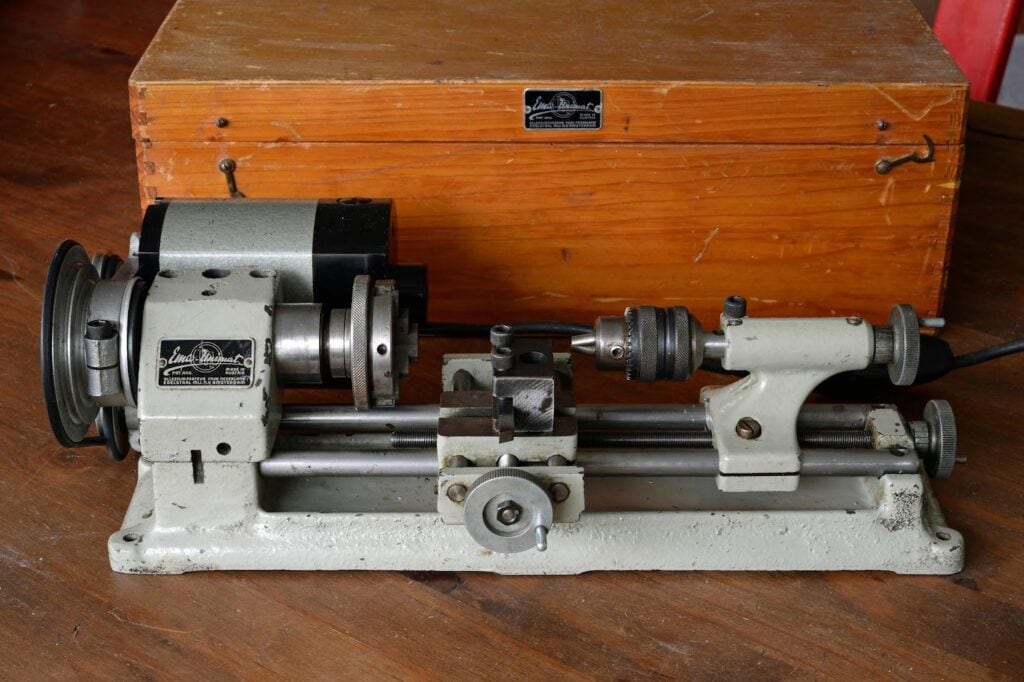
The bed is the horizontal base of the metal lathe. It supports all other parts of the lathe. It is also one of the factors that determine the size of the lathe machine.
Headstock and Tailstock
The headstock is the component of the lathe that holds the spindle and the chuck. This chuck handles and rotates the workpiece for shaping or cutting. The headstock sits at the left end of the lathe bed.
Meanwhile, the tailstock is located on the opposite side of the headstock. It is a movable component to support large and long metal pieces. Its main purpose is to prevent unwanted bending or vibrations while cutting metal.
Motor
The motor powers the metalworking lathes. The output is measured in horsepower (HP), which usually ranges from 1/8 HP to 3HP.
To turn on this motor, press the power-on switch located near it. Adjust the speed control dial to control the power output.
Spindle and Chuck
The motor drives the spindle to shape the various metals. This spindle is part of the lathe that holds the chuck.
The chuck is basically a clamp that grips the metal workpiece. It secures the material in place as the cutting tool shapes it.
Chucks are available in two main types—3-jaw or 4-jaw. The former is a universal chuck, while the latter is an independent chuck. However, other specialized chucks are also available.
Cross Slide and Carriage
The cross slide is an adjustable part of the metalworking lathe. It moves perpendicular to the bed, which allows you to change the cutting tool’s position.
On the other hand, the carriage holds the cutting tool. It moves along the bed, enabling you to make precise cuts on the workpiece.
Tool Rest
As its name suggests, a tool rest is a part of the lathe where you can rest the tools while shaping the metal. It is usually adjustable, so you can change the position of the tools depending on the metal you are working on.
Depending on the model of the metal lathe, some tool rests can handle multiple tools at once. These make it convenient when switching between various cutting tools.
What Are the Types of Metal Lathes?
A metal lathe is a turning lathe specifically designed for metal workpieces. However, this type of lathe is further divided into subcategories, depending on the operation they use.
Below are the different types of metalworking lathes.
Engine Lathe
As its name suggests, an engine lathe uses steam engines as a source of power. It provides continuous rotation, making it ideal for boring or drilling into metal pieces.
Turret Lathe
This type of metal turning lathe can quickly produce identical workpieces. It features a turret that can hold several cutting tools at once.
Turret lathes can duplicate precise cuts more efficiently than other metalworking lathes.
Tool Room Lathe
A tool room is a heavy-duty machine tool. It provides a higher level of precision than other metal lathes. It is ideal for those who want to achieve accurate cuts.
In terms of operation, a toolroom lathe uses a steam-powered engine. It allows you to control the speed of the cutting tool based on your desired cut.
Bench Lathe

A bench metal lathe is smaller than an engine and toolroom lathe. This compact tool is suitable for hobby or small-scale machining projects.
Centering Lathe
A centering metal turning lathe has a dual-head design. It holds the workpiece while the head cuts it. This type of tool is ideal for centering metal workpieces.
What Kind of Materials Can a Metal Lathe Cut?
A metalworking lathe machine can handle various metals, whether ferrous or non-ferrous. Below are some types of metals you can cut using this tool.
Steel is the most common material you can cut on a metal lathe. It is a versatile metal and easy to shape using different cutting tools.
Aluminum is another material often machined on a metal lathe. This lightweight, corrosion-resistant metal is ideal for automotive, aerospace, and general construction.
Copper can be cut on a metal lathe machine as long as you use high-speed steel cutting bits. This soft, ductile metal is popular in electrical wiring and plumbing applications.
Brass, which is common in architectural and decorative pieces, can also be machined on a metal lathe.
Other materials you can cut on a metal lathe are bronze, cast iron, titanium, and zinc. However, ensure you are using the proper cutting bits based on the material to be cut.
What Are the Applications of Metal Lathes?
Metal lathes can handle a wide range of applications. Below are some of the common uses of metal lathes.
- Turning – It involves rotating the workpiece to remove unwanted material. It can produce metal with your desired shape or size.
- Drilling – A metal lathe can bore or drill holes in the workpiece. It can create tools out of metal, such as screws.
- Facing – It is the process of removing material from the end or shoulder of the metal workpiece. The end result is varying machined parts.
- Knurling – It creates small ridges on the metal surface to give you a better grip. It also provides visual appeal to the material.
- Tapering – It is a turning technique that removes material at an angle. It results in a tapered metal piece with a smooth surface finish.
- Threading – A metal lathe can also create internal or external threads on metal pieces. It makes it easier to produce a range of screw threads.
How Much Do Metal Lathes Cost?
The exact price of metal lathes varies depending on their features, size, type, and manufacturer. Entry-level hobbyist metal lathes cost around a few hundred dollars. However, industrial metal lathes for professional use can set you back thousands of dollars.
Below are the average costs of different types of metal lathes.
- Mini metal lathes – These can handle hobby and small-scale metalworking projects. They cost around $200 to $1,000.
- Mid-sized lathes – They provide more advanced features to handle medium-scale metal tasks. They typically range in price from $2,000 to $10,000.
- Industrial lathes – These professional-grade metal lathes are used in heavy-duty metalworking applications. They can set you back $30,000 and more.
Conclusion
Cutting metal with precision is challenging. Fortunately, a machining tool known as the metal lathe can make the task easier.
It is a type of lathe specifically designed for metalworking applications. It features a stationary cutting tool that accurately removes unwanted parts from the metal.
Do you have other questions about metal lathes? Feel free to send your queries to our contact page!