
If you want to build a new basement or renovate your garage space, you likely need to work with concrete. Having the right tool is essential for the success of the project and your safety. Consider an angle grinder to smoothen and grind the concrete.
To use an angle grinder properly, ensure you have the right tools. Choose the proper grinding wheel and wear appropriate safety gear. Then, prepare the surface before grinding the material.
However, with so many grinding wheels, it can be overwhelming to pick the proper one. This article will teach you how to choose the right attachment. It also covers the steps of grinding concrete with an angle grinder. But first, let us talk about this versatile power tool.
What Is An Angle Grinder?
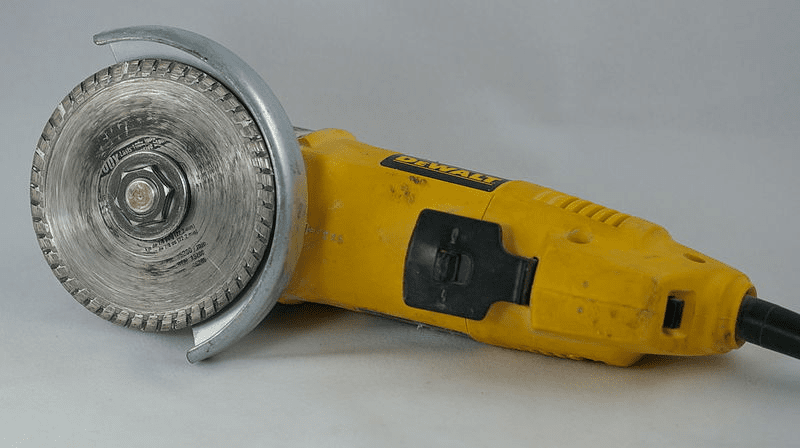
An angle grinder is a handheld power tool for polishing and grinding various materials, hence the name. It is compatible with several accessories to accomplish different tasks.
The most popular angle grinder tool is the rigid abrasive wheel, also known as a disc or a blade. However, an angle grinder can also use interchangeable metal brush cups, flap discs, and other types of cutters.
An angle grinder usually has a built-in motor that drives the cutting tool. But it can also be powered with compressed air.
Angle grinders can suit professional and DIY projects. They are popular in metal fabrication shops, machine shops, and construction sites.
Pros
One of the biggest advantages of an angle grinder is its versatility. This power tool accepts different cutting bits and attachments. Hence, it can perform various tasks, including cutting, grinding, and polishing metal.
Most angle grinders also let you adjust the cutting speed and angle. These allow you to perform tasks quickly.
Plus, angle grinders tend to be small and compact. They are easy to carry and store away when not in use.
Cons
An angle grinder also has several downsides worth considering before buying or using this tool.
First, an angle grinder uses a grinding disc that quickly wears out when cutting concrete. It requires you to replace the tool regularly to ensure optimal working conditions.
The size of the angle grinder could be a double-edged sword. While it is easy to handle, it limits the cutting blades you can use. A small angle grinder can also take much time to level large surfaces, such as concrete floors.
Finally, angle grinders might be uncomfortable to use, depending on the project. For example, if you use it on concrete floors, you need to get down on your hands and knees. You can avoid this if you opt for a walk-behind floor grinding machine.
Can I Use an Angle Grinder on Concrete?
Yes, you can use an angle grinder to cut and smoothen concrete surfaces. However, note that this tool only works on concrete if you use the right grinding wheel. Use a diamond blade to cut wet and dry concrete. You can rely on this material to slice the toughest materials.
You must also remember the limitations of an angle grinder. Since it is a handheld power tool, it can only handle a certain depth. Consider a floor grinder or a walk-behind grinder if you intend to grind down the concrete to a new layer.
How To Grind Concrete With Angle Grinder? 7 Easy Steps to Follow
Concrete is among the most difficult materials to work with. Fortunately, an angle grinder can handle this material with relative ease.
Below is the step-by-step process of grinding concrete with the angle grinder.
Get the Right Grinding Tools
The first thing you must do before using the angle grinder is prepare the required tools. Here is a list of the stuff you will need to grind concrete.
- Grinding blade attachment
- Water hose or pressure washer
- Dust shroud with vacuum hose attachment (if you have a dry angle grinder)
- Wet or dry vacuum with a compatible hose
- Safety equipment (more on this item in the next section)
Ensure to have these items on-hand before you begin grinding. Doing so makes the process faster and easier.
Wear Safety Gear

An angle grinder could be dangerous when you mishandle it. It rotates an average of 10,000 times (RPMs), which can kick up a lot of concrete and dust. These can lead to injuries if you are not careful. Hence, staying safe should be among your top concerns when using an angle grinder.
Wear safety glasses to protect your eyes from airborne particles.
You must also wear a mask to avoid inhaling debris created during the grinding process. If you have serious respiratory problems, use a respirator to help you breathe properly.
Get a pair of gloves for a firmer grip on the angle grinder. It can also protect your hands from cuts and sharp objects.
As for your clothing, you can dress in any comfortable attire. However, avoid loose-fitting shirts and pants as well as dangling accessories. These increase the risk of getting caught on the tool while it is rotating.
Finally, consider knee pads if you will be working on a concrete floor. You likely need to kneel when grinding. Having pads can prevent scrapes on your knees.
Clean the Surface
After preparing the right tools and safety equipment, you can start cleaning the concrete surface.
Use a broom to remove dirt, dust, and other stuck-on particles on the material. You can also use a vacuum to target fine particles.
If you are working on a concrete floor, make sure to mop it clean. Soak the mop in a solution of water and detergent. Then, tidy up the floor.
Consider a pressure washer to remove stubborn debris on the concrete, especially in corners. You should not have any debris residue because the angle grinder could get stuck in it.
Prepare the Angle Grinder
Once the concrete floor or surface is clean, you can prepare the angle grinder.
First, get an extension wire for your angle grinder (if it is not a wireless model) and a wet/dry vacuum. We recommend using a power strip with surge protectors to avoid unnecessary damage to your tool.
Next, connect the dust shroud to the angle grinder if your unit has one. Doing so can minimize the debris created during the grinding process. Secure the dust shroud in place by tightening the clamp fitting on the suction hood.
Finally, attach the vacuum nozzle to the dust shroud adapter. You also need to fasten it to the wet and dry vacuum inlet.
Choose the Right Grinding Wheel
With the angle grinder still turned off, you can connect any grinding wheel to the tool.
We recommend using a diamond polishing pad for beginners and a diamond grinding wheel for heavy-duty tasks. However, it is still best to consider your needs and preferences.
A low-grit diamond disc can grind down on concrete quickly. However, it leaves a rough finish. Meanwhile, a high-grit diamond wheel provides a smooth and polished look. The only downside is that it can take quite some time to remove concrete.
The rotations per minute (RPM) are another factor to consider when choosing a grinding blade. Make sure the maximum RPMs of the diamond wheel meets the RPM of your angle grinder.
Finally, secure the grinding wheel to the angle grinder before moving to the next step.
Start Grinding
Now that everything is ready, you can turn on the angle grinder to smooth the concrete.
Before touching the surface, observe the grinding wheel first. It must spin continuously if it is secure. If you notice any wobbling, stop the grinder immediately and tighten the clamp. Test it again for the second time.
Next, slowly pass the angle grinder to the concrete floor. Start at the edges and slowly work your way inwards. Avoid leaving the grinder in one spot for too long. You must constantly move it in a circular motion for a consistent finish.
Once the perimeter of the concrete floor is smooth, you can grind down on the untouched sections.
Occasionally check the concrete surface for evenness. If you are grinding dry concrete, consider removing the dust shroud to smooth corners and edges. It has a component that obstructs the diamond wheel from polishing the surface nearest the wall.
Continue grinding down the concrete floor until it is smooth and level.
Turn Off the Angle Grinder
You can switch off the angle grinder if you are already satisfied with the results. Wait for a few seconds until the grinding disc stops spinning. Once it does, you can set the angle grinder on the table and unplug it from power.
Let the concrete dust and debris settle in the work area. Then, use a mop or vacuum to remove these particles from the newly polished surface.
What Are the Other Applications of an Angle Grinder?
As previously mentioned, an angle grinder is among the most versatile power tools to buy today. It can handle several applications and tasks, which we will list below.
- Cut ceramic tiles, stones, and other masonry materials
- Drill, cut, and clean metal
- Carve and plane wood
- Strip off rust, paint, and other exterior finishes
- Remove mortar
- Sharpen various tools
Conclusion
Concrete is a difficult material to work with. However, you can quickly grind it with a handheld angle grinder.
To use an angle grinder, you must prepare the necessary tools. These include the right grinding wheels, safety gear, and cleaning supplies. You can refer to the guide above for the step-by-step process of grinding concrete.
Do you have other questions about using an angle grinder? Feel free to send your queries to our contact page!