
Woodworkers have a wide range of tools that they can use to make specific projects or perform certain tasks faster. One of the more iconic and commonly used power tools available at the disposal of woodworkers is the bandsaw.
Bandsaws have been around for more than a century now and have seen widespread use in many industries. Companies have continued to innovate and improve bandsaw design making them one of the most commonly used power tools in woodworking workshops, in the food industry and in manufacturing.
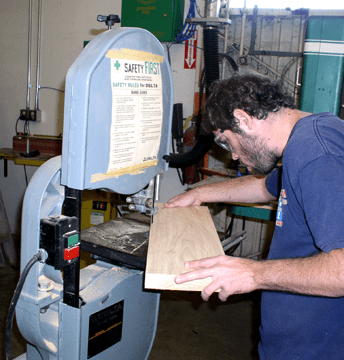
Bandsaws get their name from their use of a continuous blade looped around wheels that use a motor to run the blade through the machine. When fully assembled, you actually only see a few inches of the blade running through the work table. Because of the unique blade orientation, design and the downward cutting motion, bandsaws are known to be very easy and safe to use. This makes them a great pick for beginners or students looking to learn basic woodworking cutting techniques.
Despite their appearance, bandsaws are rather complicated machines which come in a wide range of shapes, sizes and power outputs. Don’t worry though because we’ll be going over the different kinds of bandsaw, the basics of bandsaw design and which ones we recommend all in this article.
Table of Contents
| Topic | Page |
| Quick Intro to The Different Types of Band Saws | 1 |
| Different Types of Band Saws – Main Categories – Horizontal Band Saws – Vertical Band Saws – Common Subcategories – Handheld / Portable Band Saws – Free Standing Bandsaws – Benchtop Bandsaw – Metal BandsawsMeat Bandsaws | 3 – 5 |
| Our Recommended Bandsaws | 6 |
| Bandsaw Buying Guide – Uses – Bandsaw Blade Types – Important Features – Blade Width – Throat Capacity & Cutting Height | 7 – 9 |
| FAQs | 9 – 10 |
| Conclusion | 10 |
The Different Types of Band Saws
Main Categories
There are two main categories of table saw. Namely the vertical bandsaw and horizontal bandsaws. Let’s break down the two.
Vertical Band Saws
Vertical bandsaws refer to bandsaws that have their blade oriented in a vertical cutting position. They are designed to make rip cuts, curved cuts and some models even allow you to make bevel cuts. Vertical bandsaws are also the most common variants available on the market and arguably the most popular choice for woodworkers.
Vertical bandsaws are somewhat more versatile compared to horizontal bandsaws because of the larger work table and deeper throat capacity. Vertical bandsaws also give you more control over a workpiece because you have control over the rate at which you feed the material into the saw. The vertical orientation of the blade keeps the cut in a consistent position and lets you make complex cut outs and helps making curved cuts easier.

Horizontal Band Saws
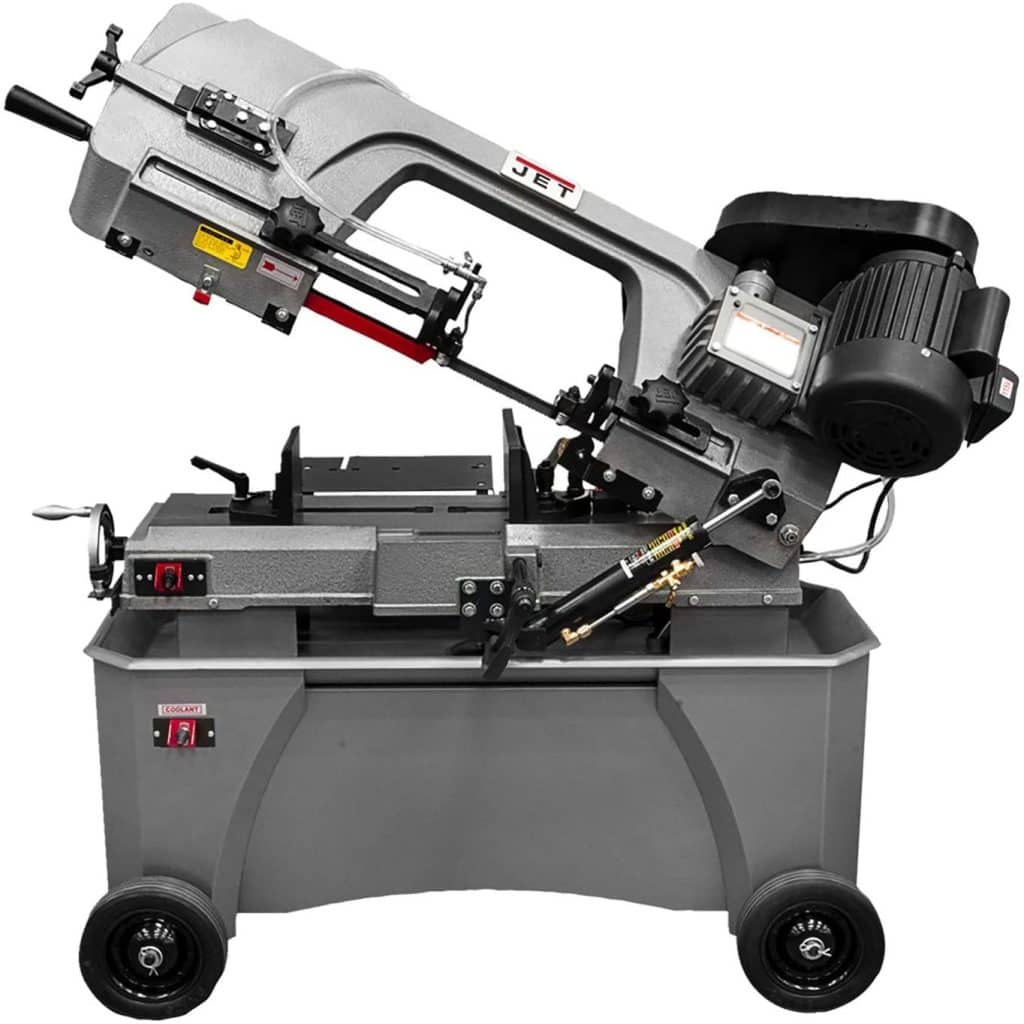
Horizontal bandsaws do however offer more accurate cuts when used on longer materials such as PVC or metal pipes and even wooden beams. Horizontal bandsaws act in a similar way to chop saws or miter saws in that you need to lower the blade onto the material. You also have control over the angle at which you want to cut. The horizontal orientation of the blade makes it difficult to make curved cuts or complex cut outs. Most horizontal bandsaws have a built in clamp that lets you lock down the material you want to cut. This makes it excellent at cutting through tougher materials that would cause too much vibration if used on a vertical bandsaw.
Whether one or the other is better depends on the type of material you want to cut and the type of cuts you plan to make. Metalworking workshops tend to use horizontal bandsaws because it offers more security when cutting pipes or metal bars while woodworkers use vertical bandsaws more often because it gives them more versatility when it comes to making curved or more complex cutting patterns.
Now that we have a clear description of the two main categories of bandsaws, let’s dive into the common bandsaw variants and which category they fall under starting with the portable bandsaws.
Common Subcategories
Bandsaws come in all shapes and sizes. Here are the most common variants you’re most likely to come across.

Handheld / Portable Band Saws
These are the latest addition to the bandsaw family of power tools that have the smallest throat capacities and motors but occupy a more specific niche. Handheld bandsaws see use with specialists such as electricians, plumbers and maintenance contractors that need to cut metal or PVC pipes in work sites that don’t always allow bigger saws to be used.
Free Standing Bandsaws
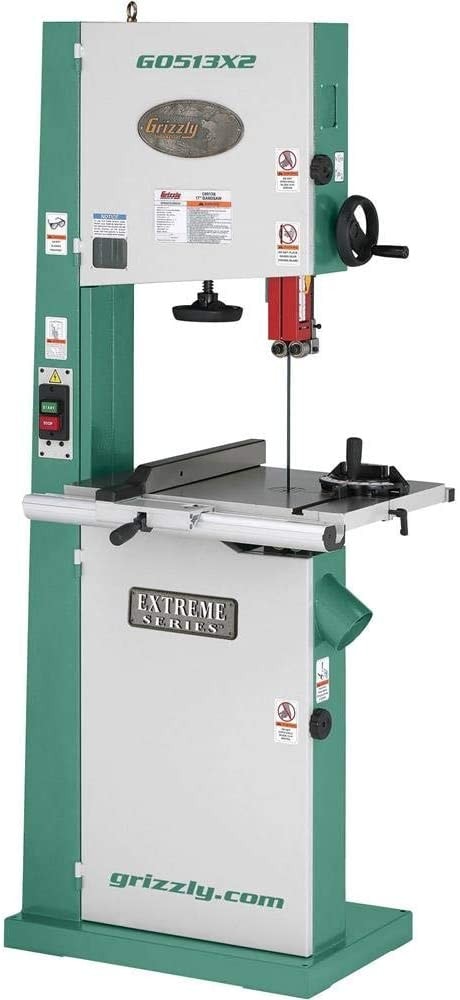
Free standing bandsaws are commonly used in professional woodworking workshops and mills. These are the most common variants you’re most likely to come across in workshops because of how durable and powerful their motors can be. The larger throat capacity makes it appealing for professionals who cut larger pieces of wood regularly.

Benchtop Bandsaws
As the name suggests, a benchtop bandsaw is meant to be installed or used on top of a workbench. These are essentially scaled down bandsaws featuring smaller throat capacities and motors. Benchtop bandsaws are much cheaper however and are just as versatile as their larger counterparts. This makes them very popular among small workshop owners and DIY enthusiasts.
Metal Band Saws
These bandsaws are commonly in the horizontal bandsaw category; however, vertical metal bandsaws do exist. Horizontal metal bandsaws feature much shorter throat capacities and are commonly used in machine shops to cut bar stock or structural steel.


Meat Band Saws
These are used in the culinary industry to cut through large slabs of meat or bone. The meat is usually frozen before being put through the bandsaw to make the process sanitary. Meat bandsaws are designed to be on the compact side and are usually smaller than benchtop models. Meat bandsaws are also designed to be easier to clean and use smaller blades.
Our Recommended Bandsaws
We compiled a short list of bandsaws that we recommend from each category.
| Model | Features and Link | |
Portable Bandsaw |  DEWALT DWM120K | Bandsaw Specs: – Motor: 10 amp – Throat Capacity: 5 inches – Cutting Height: 4 ¾ inches – Cutting Speed: 100 – 350 FPM – Weight: 15 lbs Bandsaw Features: – LED work light – Variable speed dial – Rubber bumpers – Dual ball bearing blade guide – Sturdy plastic storage case – 3 year warranty |
Benchtop Bandsaw |  WEN 3962T | Bandsaw Specifications: – Motor: 3.5 amp – Wheel size: 10 inches – Throat Capacity: 9 ¾ inches – Cutting Height: 6 inches – Cutting Speed: 1520 – 2620 SFPM – Weight: 73.5 lbs Bandsaw Features: – 3 in 1 dust port – Comes with stand & miter gauge – Ball bearing blade guide – Dual speed – Work light – Large work table – 2 year warranty |
Free Standing Bandsaw |  JET JWBS-14SFX | Bandsaw Specifications: – Motor: 15 amp – Wheel size: 14 inches – Throat Capacity: 13 inches – Cutting Height: 13 inches – Cutting Speed: 3,000 SFPM – Weight: 272 lbs Bandsaw Features: – Dual dust ports – Aluminum fence – Ball bearing blade guide – Large work table – 5 year warranty |
Metal Bandsaw | SHOP FOX W1715 | Bandsaw Specifications: – Motor: 5 amp – Throat Capacity: 6 inches – Cutting Height: 4 ½ inches – Cutting Speed: 78, 108, 180 FPM – Weight: 117 lbs Bandsaw Features: – 3 in 1 dust port – Adjustable cutting arm – Automatic Shut‐Off – Three speed settings – Vise jaws – Ball bearing blade guide – Large work table – 2 year warranty |
Meat Bandsaw |  VBENLEM Bone Bandsaw Machine | Bandsaw Specifications: – Motor: 19 amp – Throat Capacity: 7.09 inches – Cutting Height: 8.3 inches – Cutting Speed: 2952 FPM – Weight: 70.5 lbs Bandsaw Features: – Stainless steel work table – Cast aluminum Construction – Comes with 3 blades – Easy to clean – Low noise – Enhanced safety features – 1 year warranty |
Bandsaw Buying Guide
Uses of a Bandsaw
Bandsaws are a very versatile group of powertools capable of making various types of cuts across different materials.
In general, bandsaws are predominantly used to cut curves in thick lumber, rip lumber, make crosscuts and resawing lumber of varying thickness. Bandsaws let you either free hand cut a shape or pattern out of wood or you can be accurate as well with the help of a rip fence and can make bevel as well as miter cuts.
Because of the bandsaw’s versatility, it is one of the most common power tools used in workshops across the globe by students and professionals alike.
Bandsaw Blade Types
Bandsaw blades are almost just as diverse as bandsaws themselves. There are blades for all kinds of material and types of cuts. Let’s go over some of the most common ones you’ll most likely run into.

Standard Tooth Blade
Also known as regular tooth blades, these are considered a general purpose blade and are used for a wide range of materials including metal. These blades have teeth that are all evenly spaced, angled and are uniform in size.
Hook Tooth Blade
These blades have steeper angled teeth that resemble the end of a hook. These have a more aggressive cut and are meant to be used with high speeds. Hook tooth blades cut metal and hardwood quite efficiently but don’t the smoothest of finishes.
Variable Tooth Blade
These unique blades have teeth that are of different lengths and angles. The point of this tooth pattern is to reduce vibration and noise when making cuts.

Skip Tooth Blades
These blades are similar to the standard tooth blades with the main difference being the space between teeth is a whole tooth length apart hence the name skip tooth blade. These have less TPI and have a rougher cut.
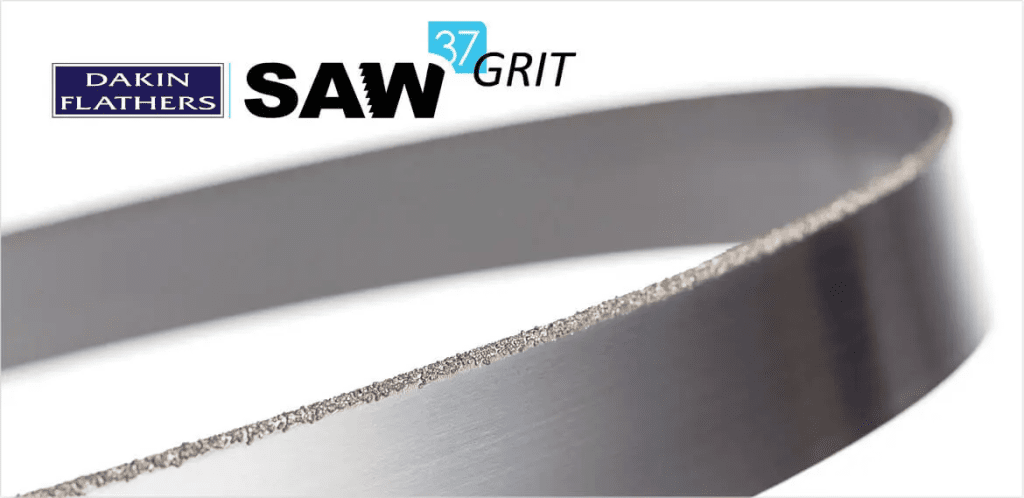
Diamond Edged Blades
These specialty blades have an abrasive material lining the cutting edge rather than metal teeth. These blades are used mostly for cutting through tougher material like metals and stones such as brick or tiles.
Important Bandsaw Features
Blade Width
A unique feature that bladesaws have is the ability to accept blades of different widths. Thicker blades will have a harder time cutting curves but are better for thicker or tougher material. Thin blades have the advantage of being more flexible, capable of cutting tighter curves without warping.

Throat Capacity and Cutting Height
An important factor to take note of is the throat capacity and max cutting height of a bandsaw. Let’s go over both.
Throat capacity refers to the amount of space there is between the blade and the arm of the bandsaw. This is how much space you have to work with and dictates the size of the workpieces you can fit in the saw. Bandsaws have varying throat capacities and can usually be determined by how wide the wheel diameter is.
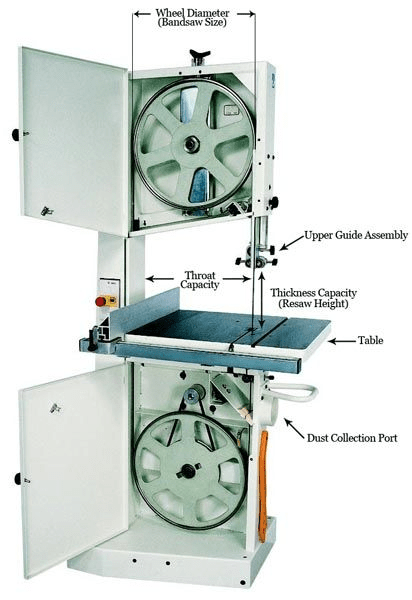
Cutting height refers to the maximum height of a workpiece you can fit in the saw. This is the distance from the top of the work table to the upper blade guide assembly. The cutting height on a bandsaw differs per manufacturer and classification. On average, free standing bandsaws have the largest throat capacity and cutting height out of the three classifications with the handheld bandsaws having the smallest.
FAQs
Q: How often do I need to replace the blade on my bandsaw?
A: This depends on several factors such as the type of material you are cutting and how frequently you use the bandsaw. Bandsaw blades are generally very durable but will need to be replaced eventually. Here are a couple of indicators that’ll tell you when you may need to replace the blade.
- When the blade starts becoming noisier when making cuts.
- When the blades start to tear out more material than usual.
- Visual indicators such as chipped or bent teeth.
- When the blade starts to burn the material that it’s cutting.
There are methods to sharpen a bandsaw blade but these require a lot of patience. You could try going to a local metalsmith instead to have it sharpened.
Q: Bandsaw or table saw, which one is better?
A: While bandsaws and table saws have similar purposes, one clearly has the advantage over the other. Bandsaws are excellent general purpose cutting tools that are safer and more beginner friendly to use compared to a table saw. However, table saws do have the advantage when it comes to making rip cuts across a large workpiece.
Q: Which bandsaw variant should I buy?
A: Whether or not one bandsaw variant is better for you depends entirely on what kind of projects you do. If you cut pipes or bars then a metal or handheld bandsaw should do just fine. If you need to make rip cuts or curved cuts on larger workpieces then a free standing bandsaw should provide you the heavy duty cutting action you need. If you need the same cutting quality on a smaller platform then the benchtop bandsaw is the one for you.
Conclusion
There we have it, the different types of bandsaw and the basics of bandsaw design. We hope that this article has taught you a thing or two and that you leave here with a better idea on which bandsaw is best for you. Thank you dear reader and happy cutting!