If you are into woodworking or metalworking, you probably heard about the jig saw. It is a versatile power tool that can cut patterns for various DIY projects. But like any other tool, it can be tricky and dangerous to use, so we created this guide to ensure your safety.
To use a jig saw, you must first prepare the necessary tools. These include the cutting blade, pencil or marker, clamp, and safety gear. Set up the jig saw by attaching the proper blade. Then, mark the cutting area on the material. Secure it with a clamp before making the cut.
However, cutting with a jig saw might feel different on various materials. This article will teach you how to use a jig saw when cutting a range of materials. But first, let us give you an overview of this versatile tool.
What Is a Jig Saw?
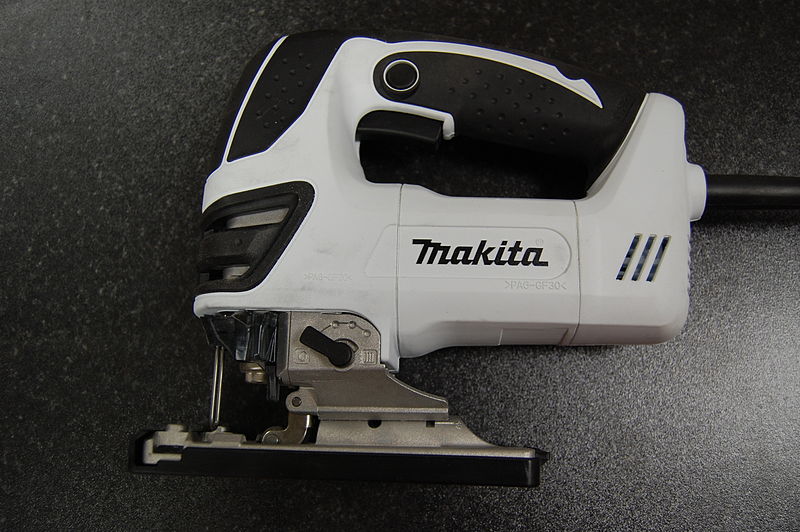
A jig saw, or a jigsaw, is a powerful handheld saw that uses a thin blade to cut different materials. It moves up and down to create shaped curves, including stenciled patterns, on wood and metal. This motion also allows for efficient cutting through the material.
Besides curved cuts, a jigsaw can make straight, beveled, and plunge cuts. This versatile tool suits different projects, such as crafting, woodworking, and general construction projects.
What Are the Parts of a Jig Saw?
A jigsaw tool comprises several parts that work together to make a cut. Below are the essential components of a jigsaw.
- Handle – It is the part where you hold the jigsaw to control its movement. It comes in two different styles: bow handle and barrel grip. Also known as the D handle, the bow handle sits on top of the saw. It is ideal for one-hand use. Meanwhile, the barrel grip is integrated into the body of the tool. It can be used with both hands to make accurate cuts.
- Trigger – It refers to the switch located on the handle. It activates the saw and starts the cutting motion.
- Lock-on Button – This part sits next to the trigger. It can lock the jigsaw at the “On” position, so you do not have to hold the trigger continuously.
- Motor – It is the power source of the jigsaw. It drives the movement of the cutting blade.
- Saw Blade – It is the cutting component of the power tool. It comes in various sizes and configurations to handle different materials.
- Clamp – It holds the blade in place. It is also an adjustable component that lets you change the blade.
- Roller Guide – This component supports the blade during cutting. It ensures proper blade alignment to improve cutting accuracy.
- Speed Control Dial – Also known as the variable speed dial, it lets you adjust the blade speed to gain more or less control over the power tool.
- Orbital Action Dial – This part is exclusive to orbital jigsaws. It allows you to control how much the blade rotates with each stroke.
- Shoe or Sole Plate – It refers to the metal or plastic base that rests on the material being cut. It helps maintain the desired cutting angle.
How To Use A Jig Saw? 8 Easy Steps to Follow
Now that you know the different jigsaw parts, you are ready to use this power tool. Here is a detailed guide on how to use a jigsaw safely.
Gather the Necessary Tools
First, you must prepare the necessary gear for your DIY project. Besides the jigsaw itself, you will need the following things:
- Jigsaw blade
- Pencil or marker
- Allen wrench (optional; if you need to adjust the blade clamp)
- Workbench, table, or any flat surface
- Wood to be cut (or alternative material)
- Clamps (to hold the material)
- Safety gear
Wear Protective Equipment
After gathering the essentials, you must follow the necessary precautions. Wear proper safety gear to prevent accidents and injuries that may arise during the cutting process.
Use a mask and a pair of safety glasses to keep your face away from flying debris. Having a mask can also prevent you from inhaling dust generated by the jigsaw.
You can also put on gloves to protect your hands from sharp tools. Use a pair that is made with high-quality materials for sufficient protection.
It is also best to wear earplugs because the jigsaw creates a loud noise while cutting material. If you do not like the feel of earplugs, you can use alternative hearing protection devices.
As for the outfit, there is no specific requirement. However, you might want to wear clothing that covers your skin. These include a long-sleeve shirt, long pants, and closed-toe shoes.
Remember that a jigsaw is potentially dangerous to operate. Wearing proper safety gear can ensure your well-being.
Select the Right Blade
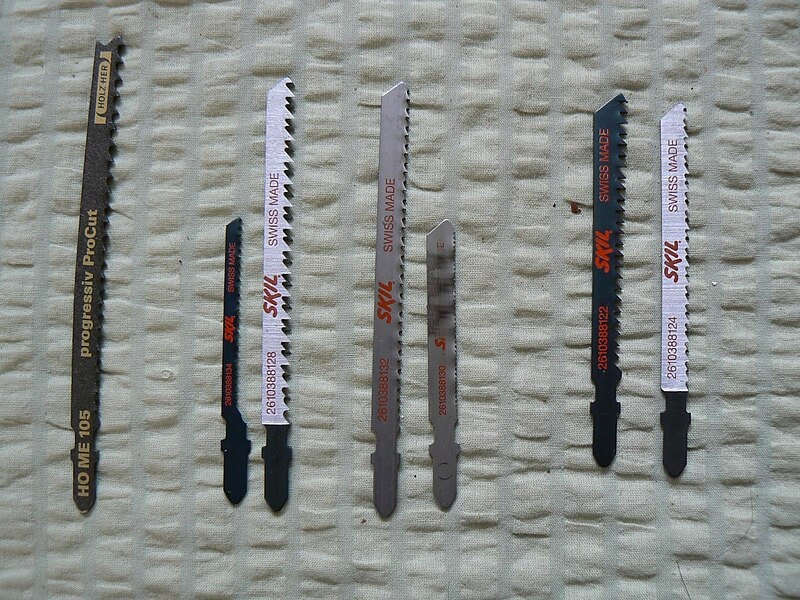
Once you have worn safety gear, you can start looking for the right cutting blade. Your choice depends on the material you intend to cut.
For example, if you want to cut wood, use high carbon steel (HCS) or wood-cutting blades. These affordable and flexible blades can make precise cuts on soft materials, such as softwood.
But if you are dealing with metal, choose high-speed steel (HSS) or metal-cutting blades. Their sturdy construction can handle tough materials like copper and steel.
Consider bi-metal (BIM) blades if you want flexibility and durability at the same time. You can use them for cutting tiles and plastic.
Aside from the blade material, the teeth per inch (TPI) is also an essential consideration. It determines how fast and accurately the blade will cut the material.
A higher TPI can make precise cuts with less chip out, but it is slow. Meanwhile, a lower TPI blade cuts much faster, but it leaves rough edges. Choosing between two types of jigsaw blades depends on your specific project requirements.
Prepare the Jigsaw for Cutting
Now that you have the right jigsaw blade, you can attach it to the power tool. But before that, unplug the jigsaw from the electric outlet. Or remove the battery if it is a battery-operated device.
Release the blade clamp to connect the blade to the jigsaw. Depending on the model unit, you may need an Allen wrench to loosen the bolts locking the clamp in place. Those who own a new model can simply pull the lever to move the clamp out of the way.
Slowly insert the correct blade into the clamp. Make sure it has the proper orientation; the teeth of the blade must face toward the front of the saw.
With the blade inserted, engage the clamp mechanism to lock it in place. Gently tug the blade to see if it is properly secured. If you notice slight movement, loosen the clamp and re-attach the blade.
Once you have checked the blade alignment and position, you can completely lock the clamp. Then, plug your jigsaw back in or insert its battery, depending on the unit you own.
Set Up the Material
You are one step away from cutting the material. But first, secure the board you intend to cut. The jigsaw tool vibrates a lot when cutting wood, so if you do not hold the material, it can move around. That leads to injuries and inaccurate results.
Place the metal sheet or wooden board on a flat cutting surface. Next, use clamps to secure the material to the workbench. Leave enough space underneath to provide room for the blade to maneuver.
If you are working with a large sheet of wood, metal, or plastic, consider placing two tables on either end. Doing so can make it easier to cut through the center.
Besides securing the material, ensure to mark the area you intend to cut. Use a ruler or t-square to draw a straight line. You can also label curves or intricate patterns, depending on your DIY project. These markings help you achieve precise results.
Start Cutting
Once the material and jigsaw are ready, you can start cutting.
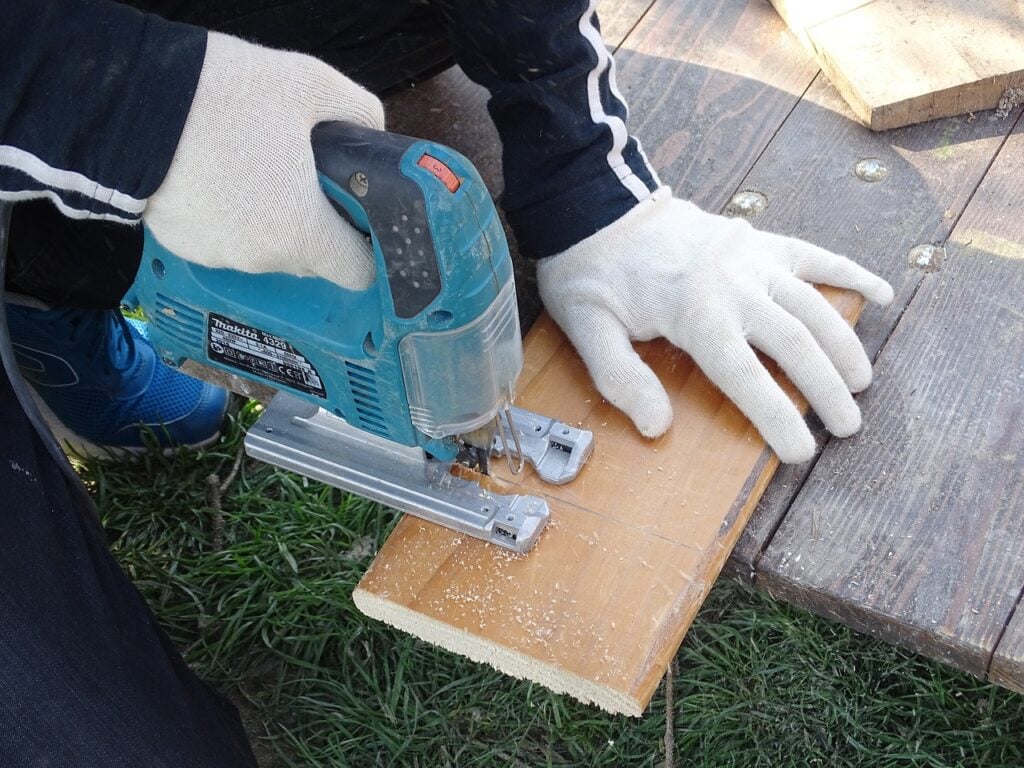
Position the jigsaw tool against the material and near the markings you made. However, ensure the blade is not touching the material before you press the trigger switch. Instead, let the blade run for a few seconds before making contact with the board to ensure the right speed. If it is not up to speed, the jigsaw can grind against the material and cause damage.
With the blade at full speed, you can make smooth cuts across the board. Slowly move the jigsaw forward to cut through the material. Avoid applying too much pressure on the power tool. Simply guide the blade as it slices the board.
However, cutting may feel different depending on the material. Below are some general guidelines when working on various objects.
- Wood – Tilt the jigsaw until the blade is parallel with the wooden board. Start the saw at maximum speed. Then, gently lower the blade to start cutting wood. Maintain gentle pressure throughout the process.
- Metal – To cut sheet metal, use a slower speed on your jigsaw to prevent overheating. Consider applying lubricant to reduce friction and heat buildup. Then, make slow and steady cuts on the metal sheet.
- Plastic – Start the jigsaw with a medium speed setting. Apply steady pressure while cutting plastic to prevent it from melting.
- Tile – Go slow when cutting tile because it easily breaks. Use short cuts to remove the material gradually.
Make Additional Cuts as Needed
After the first cut, you can re-position the jigsaw blade to make extra cuts as needed.
Consider adjusting the shoe plate to change the cutting angle. You can choose from 0 to 45 degrees when creating bevel or mitered cuts. Simply loosen the screw on the back of the shoe to modify the blade orientation.
You can also make additional cuts if your initial attempt did not give you desirable results. For example, if you fail to follow the markings on the material, you can try cutting it again.
Turn Off the Saw and Clean Up
Once you are satisfied with the results, you can switch off the jigsaw. Unplug the tool or detach the battery to prevent accidental activation.
Allow the motor and jigsaw blade to cool down. In the meantime, consider sanding the newly cut material to eliminate rough edges. Then, vacuum your working area to remove sanding dust and other debris.
After several minutes, remove the blade from the power saw and clean it. Use a damp cloth to wipe off dust. Finally, store it in an area away from the reach of children.
Frequently Asked Questions
How do you cut straight with a jigsaw?
Those who want to make straight cuts with the saw might find it difficult to keep straight lines. That is because the jigsaw has a flexible blade that makes natural curved lines.
However, it is still possible to keep a straight line with the help of a circular saw cutting jig. Follow the cutting line provided by this tool to slice through the material. You can also get a speed square to cut straight lines on shorter wood.
How to cut curves using a jigsaw?
If you want to cut curved lines with the jigsaw, make sure the radius is not too sharp. Remember that this tool might be flexible, but it cannot twist and turn any way you want. Attempting to make a tight curve can lead to the saw getting stuck, or worse, the blade snapping.
How to avoid tear out with a jigsaw?
Tear out is chipping or splintering of the material due to improper cutting. The best way to avoid tear out is to use the right blade. Consider a high TPI (teeth per inch) blade to make smoother cuts with less tear out.
Another trick to reduce tear out is to place masking tape over the material. Doing so can apply pressure while you make the cut. Hence, it prevents the blade from causing excessive splintering.
Conclusion
As a woodworker or DIY enthusiast, you probably heard about the jig saw. It is a powerful handheld tool that can make different cuts on various materials.
Using a jigsaw might seem intimidating to the inexperienced. However, the process is pretty straightforward. Gather the necessary tools, including the right blade and safety gear. Then, set up the jigsaw and material before making the first cut.
Do you have more questions about using a jigsaw? You can send your queries via our contact page on the website.