Nothing is more difficult than cutting concrete. Many homeowners leave the task to professionals, but as a result, they also pay more. Fortunately, you can easily cut concrete yourself and save money with a concrete saw.
A concrete saw can cut hard materials, including concrete. To use it, you must prepare the necessary tools and safety gear. You must also choose the proper diamond cutting blade.
However, we know it can be overwhelming to choose from various blades, so we will explore each one below. This article also guides you through the steps to using a concrete saw. But first, we will cover the definition of this tool.
What Is a Concrete Saw?
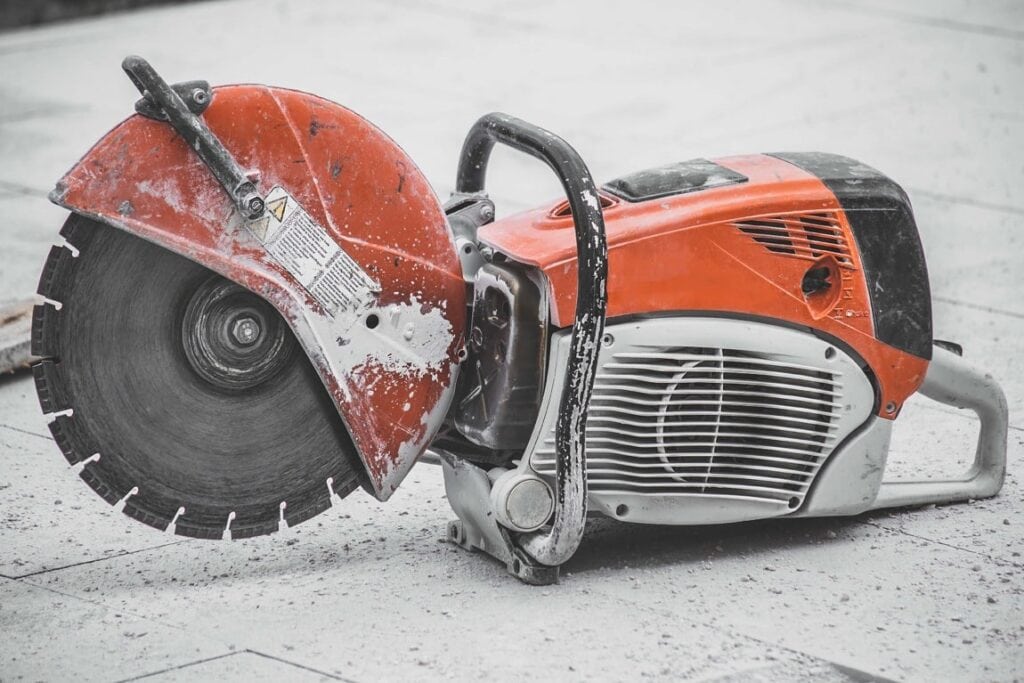
A concrete saw is a power tool that can cut hard materials, like concrete, asphalt, and tile. It uses a sharp blade, typically made with diamond, to carve different surfaces.
A concrete saw has many names. It is also called a con saw, a slab saw, or a road saw. Each one slightly varies in configuration and design but offers the same function.
Concrete saws also come in various sizes to suit different project needs. Handheld saws give you precision and mobility, making them ideal for small tasks. Meanwhile, larger floor models can handle more demanding projects that require high cutting volumes.
Concrete saws even use different power sources. Gas models provide high-speed power and mobility, but they create a lot of dust and fumes. In contrast, electric concrete saws produce less dust and noise to suit indoor projects. However, they tend to be less powerful than gas-powered saws.
Choosing the best concrete saw ultimately depends on the project scope and budget. It would also help if you understood how to cut concrete. Note that the wrong concrete cutter can lead to several problems, including structural damage to the material.
How To Use a Concrete Saw? 7 Essential Tips to Cut Concrete
A concrete saw can make the concrete-cutting process easy when you know what you are doing.
Below, we will teach you how to use a concrete saw for cutting.
Plan the Right Time to Cut the Concrete
Wet concrete is challenging to cut, while fully-cured concrete can accidentally fracture when you touch it.
We highly recommend choosing the best time to cut the concrete. Plan to use the equipment when the material is hard and half-cured to prevent breakage. The cut will also turn out smoother with less dust to clean after the process.
Prepare the Necessary Tools
Before cutting concrete, you must have the necessary tools and equipment on hand to make the task easier.
Besides the concrete saw itself, you also need the following:
- Diamond cutting blade
- Wet or dry vacuum (if your concrete saw lacks a built-in vacuum)
- Broom and dustpan
- Chalk line (for marking the cut areas)
- Ground-fault circuit interrupter extension cord (if you own an electric-powered concrete saw)
- Mason chisel
- Pry bar (to loosen and lift heavy concrete)
Store these tools in one place so that you can easily access them when cutting concrete. The last thing you want is to stop in the middle of the work to find the missing tools you need.
Wear Safety Gear
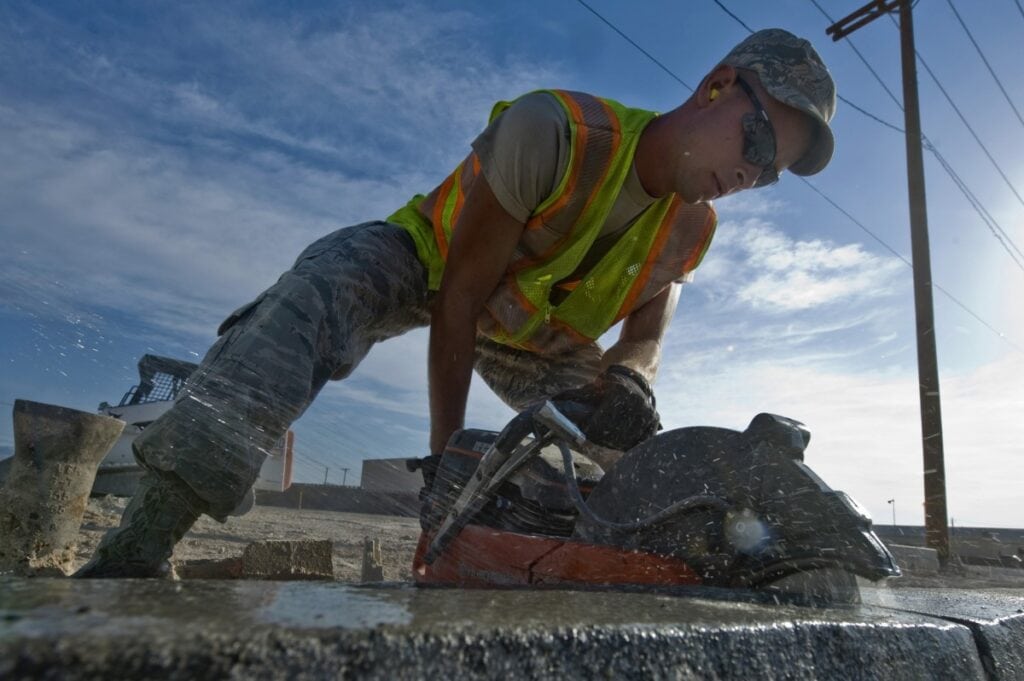
Using a concrete saw can be dangerous. For instance, airborne particles and concrete debris can accidentally fly toward your face.
It is essential to wear safety gear when working with a concrete saw.
Use safety goggles or a face shield to protect your eyes and head.
Wear a dust mask to rule out respiratory issues.
Also, consider earplugs or ear muffs to prevent loud noises from damaging your hearing.
Moreover, wear work gloves to keep your hands safe from sharp cuts.
Finally, dress in tight-fitting clothes appropriate for the job. Avoid loose clothing because it can get stuck in the concrete saw blade.
Arrange the Workspace
After having the necessary tools and safety equipment, it is time to prepare the workspace.
If you are working in a room, move furniture, carpets, and other items that could obstruct your job.
Consider wrapping doorways and windows with plastic. Doing so can minimize the amount of debris you have to clean after cutting the concrete slab.
Dust is not a primary concern for those working outdoors. Still, you must move or cover any items that could suffer damage. Cut any trees or shrubs that could get in your way.
Choose the Right Diamond-Cutting Blade
A concrete saw is useless without a cutting blade. The most popular material used is diamond due to its durability and precision.
Diamond-cutting blades come in three different types to suit various needs and budgets.
- Abrasive corundum diamond blade – This saw-cutting blade is inexpensive and readily available. However, it has a slow cutting speed.
- Dry cutting blade – This diamond-cutting wheel has jagged teeth for deep cuts. The toothed rim can also cool the blade. The only downside is that it produces a lot of dust.
- Wet cutting blade – It offers either smooth or rough teeth to ensure a more precise cut. It also uses water to lubricate the blade and clean debris while cutting. However, it is expensive.
Deciding between these diamond saw blades ultimately depends on your project needs and requirements.
Start Cutting
Once the working area and saw blade are ready, you can begin the cutting process.
First, mark the spot on the concrete slab you intend to cut. Use a chalk line to create straight bands on the surface. Having a marked line makes it easier to carve the material.
Next, lower the concrete saw on the surface. Perform a single shallow cut to break down the material.
Then, continue making incisions on the concrete surface until you achieve the desired result.
Below, we listed the dos and don’ts when using a concrete saw. Use these as a guide to preventing mishaps while handling the power tool.
Things to Do When Using the Concrete Saw
- Start with a surface incision to mark the cutting area and break up the tough concrete.
- Draw back the concrete saw every 30 seconds or so to prevent overheating.
- Use gentle pressure to make the cut. Simply guide the weight of the concrete saw.
Things to Avoid When Using the Concrete Saw
- Do not start the cut without marking the spot you intend to slice.
- Avoid putting too much pressure on the concrete saw because you increase the risk of fracturing the material.
- Avoid loose clothing because it can get stuck on the sharp diamond blade.
Clean the Concrete Saw
After cutting concrete, you must clean the power saw to ensure its longevity.
Gently remove the diamond blade from the cutting saw.
Then, use a shop rag and a non-abrasive cleaner to wipe off dust and debris.
Leave the cutting blade and exterior housing to dry in a well-ventilated room.
Finally, store the concrete saw and blade in their original packaging. Place it in a safe area away from children and pets.
How To Use a Walk-Behind Concrete Saw?
A walk-behind saw, also called a cut-off saw, creates straight and deep cuts. It can easily handle heavy or stamped concrete.
Before using a walk-behind concrete saw, wear the appropriate safety gear for your protection. You must also mark the cutting area.
Next, adjust the manual lift crank to lower the cutting blade to the concrete floor. Note that every turn of the lift crank equals a cut depth of an inch.
Slowly press the cutting blade to the concrete slab. Follow the marked line closely to create straight cuts.
Similar to using standard concrete saws, let the diamond blade do the work. Avoid putting too much pressure to prevent overheating and fractures on the material.
Conclusion
Cutting concrete is not an easy feat to do—even professionals struggle with it. Fortunately, having the right tool can make the task easier.
A concrete saw is a powerful piece of equipment that can divide concrete slabs quickly. Before using it, prepare the necessary tools and safety gear. You must also choose the proper diamond-cutting wheel for smooth, accurate cuts.
Do you have more questions about using concrete saws? Feel free to send your query to our contact page.