
If you want to sand wood surfaces, you know it can be difficult and time-consuming with regular sandpaper. A power tool like the detail sander can help smoothen surfaces quickly.
A detail sander is a powerful tool to sand wood. It can polish tight corners, crevices, and other hard-to-reach surfaces.
But did you know you can use it as a dust collection system? You can also use the sander to smoothen surfaces other than wood. This article will explore the detail sander and its various applications. We will also teach you how different it is from other types of sanders.
What Is a Sander?
A sander is a device that can smoothen different surfaces using abrasives.
The most basic type of sander is a hand or block that moves sandpaper across the surface for manual polishing.
There are also power sanders available. These types of sanders use an electric motor to smoothen surfaces in various patterns. They can quickly cover large areas with minimal physical effort and less fatigue. Hence, they are more efficient and effective at sanding than manual sanders.
Power sanders come in different types, such as detail sanders, belt sanders, drum sanders, and more. But this article will focus on detail power sanders.
What Is a Detail Sander?
Also known as a corner sander, the detail sander is a powerful tool for sanding wood. It features a triangle-shaped base to which the sanding pad is attached. Detail sanding allows you to polish small surfaces, tight spots, odd shapes, and contours.
A detail sander usually comes with a Velcro band to hold the sanding pad in place. This type of fastener also makes it easy to replace the pad with new sanding sheets once it is worn out.
Detail sanders are ultimately designed for sanding corners and other hard-to-reach areas. They are suitable for wooden furniture pieces, window frames, and complex spaces.
These types of power sanders can even remove sanding dust when you connect them to a vacuum cleaner.
Besides wood, a detailed sander can polish other materials, like metal and stone.
However, detail sanders have difficulty sanding large work surfaces. Their compact design is not capable of handling wide areas. Plus, their belts tend to wear out more quickly than other power tools, especially when handling an abrasive surface.
Below is a brief list of the detail sander’s pros and cons. It can help you decide if this tool fits your needs or not.
Pros
- The triangular base allows you to sand small crevices, tight corners, and hard-to-reach areas
- Detail sanding can polish surfaces faster than manual sanding
- It connects to a vacuum cleaner for effective sawdust removal
- It enables easy sandpaper replacement
- Compact and lightweight design
Cons
- It cannot sand large surfaces
- The belt can deteriorate quickly
- Applications might be limited compared to other power sanders
How to Use Detail Sanders
Detail sanding is relatively straightforward.
Start by wearing the appropriate safety gear. These include goggles, a dust mask, and a pair of gloves, which help protect you from injuries. Avoid wearing loose clothing and hanging jewelry to prevent them from getting caught on the power tool.
Next, choose the desired sandpaper grit to use with the detail sander. A higher grit number gives you a smoother finish. Ensure the power sander is off before you attach the sandpaper.
Hold the detail sander with both hands before turning it on.
Use gentle pressure as you work the sander on the surface.
Then, slowly move the detail sander back and forth. Follow the grain of the wood to ensure a smooth surface. Avoid staying at one spot to prevent oversanding.
After sanding, switch off the detail sander and unplug the power cord. Detach the sandpaper. However, be careful when doing so because some metal parts may become hot during use.
When not in use, store the detail power sander in a dry and well-ventilated area.
What Are the Other Types of Sander for Woodworking?
As we previously mentioned, detail sanders are just among the many types of power sanders. They come in different kinds, each suited for a specific sanding task.
We will briefly touch on these tools to help you know if they are more suitable for your needs.
Orbital Sander
As its name suggests, an orbital sander uses an orbital or circular motion to smoothen wooden surfaces. It allows you to attach a sanding pad or disc to achieve your desired results.
Orbital sanders are designed for finishing work instead of heavy-duty sanding of large surfaces. They are ideal if you do not need to remove entire paint, varnishes, or rusted layers.
Random Orbital Sander
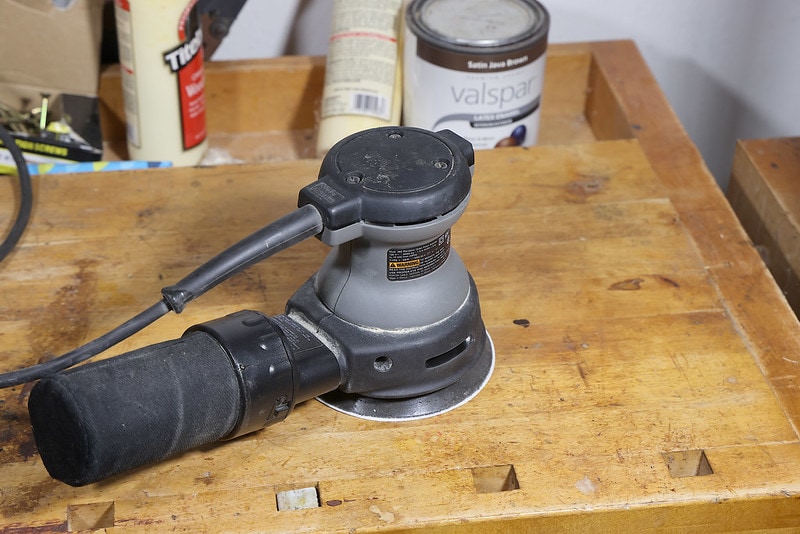
A random orbital sander works like the orbital sander. However, it also moves back and forth instead of being limited to a circular pattern.
It allows you to polish curved surfaces and corners. Plus, it does not leave streaks and scratches on the wooden surface.
Random orbital sanders even offer variable motor speeds. They are suitable for large sanding projects.
However, these types of sanders tend to be more expensive. They are also not designed for smoothing tight spaces.
Multi-sander
A multi-sander features interchangeable plates. These allow you to attach different sanding sheets or sandpapers in various shapes, such as triangles or rectangles. They can polish edges and corners with ease.
Multi-sanders are among the most versatile sanding tools to use for woodworking.
Belt Sander
Belt sanders can quickly sand the top layer of materials. They remove the rough, uneven parts to reveal the slightly grainy surface underneath. They help prepare the material for less powerful tools like the detail and orbital sander.
A belt sander can also help you remove paint and varnishes. Plus, it can shape edges.
Overall, a belt sander is an aggressive tool ideal for heavy-duty sanding tasks. However, it is not recommended if you want a fine finish.
Orbital Sander vs. Detail Sander: Which Is Better?
Orbital and detail sanders are among the most popular tools for woodworking projects. Each offers its pros and cons, so consider your project needs before finalizing your purchasing decision.
Orbital sanders use rectangle sanding pads to cover a larger area. They rotate in circles to polish rough wood surfaces. They are also more versatile, allowing you to use them on various materials and shapes.
On the other hand, detail sanders come with a triangle sanding base. They can move in tight spaces and small corners. They are ultimately suitable for polishing hard-to-reach areas.
Choose an orbital power sander if you need to sand a large surface or want a versatile tool. You will also prefer this type of sander if you prefer speed over precision.
However, invest in the best detail sander if you often work on small items, need to reach tiny spaces, or want a refined finish.
Conclusion
Sanding wood surfaces does not have to be complicated. A detail sander can make it easier and faster to smoothen the wood.
A detail sander comes with a motor to sand wood surfaces quickly. It also features a triangular base that can reach tight spots and corners.
Do you want to learn more about detail sanders? Contact us via our website’s contact page.